

Introduction
Search is evolving faster than ever, and the biggest transformation comes from Google’s AI-powered search experience. Traditional keyword-based rankings are no longer the only factor determining visibility in search results. With the rise of AI-generated summaries, conversational answers, and contextual search experiences, businesses now need to rethink their entire SEO strategy.
The emergence of Google AI mode seo is changing how content is discovered, ranked, and presented to users. Instead of showing only blue links, Google increasingly delivers direct AI-generated answers that summarize information from multiple sources. This shift is reshaping the future of SEO and creating both opportunities and challenges for publishers, marketers, and businesses.
In 2026, websites that focus only on outdated ranking techniques may struggle to maintain traffic. Meanwhile, brands that understand AI search optimization and adapt their content for generative AI experiences can gain stronger visibility, authority, and user trust.
This guide explains how Google AI Mode works, how AI-generated search results affect rankings, and how businesses can optimize their websites for the next generation of search.
What Is Google AI Mode?
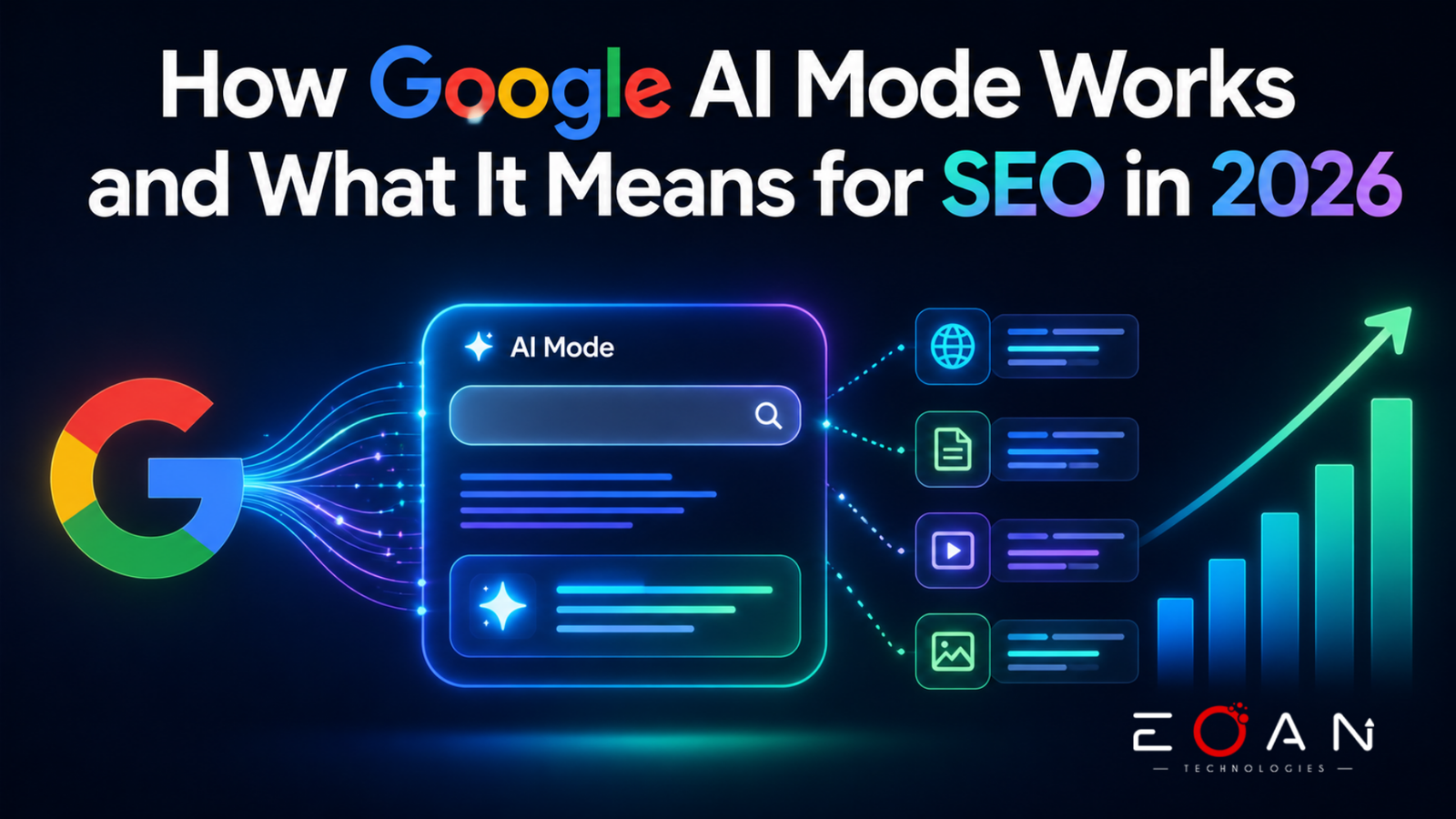
Google AI Mode refers to the AI-enhanced search experience powered by generative artificial intelligence. Instead of only displaying traditional search listings, Google uses advanced AI systems to generate contextual responses directly within search results.
These AI-generated results combine information from multiple trusted sources and provide users with conversational, summarized answers. Google’s AI Mode relies heavily on natural language understanding, semantic search, machine learning, and real-time information retrieval.
Unlike traditional search, where users scan multiple websites to find answers, AI Mode attempts to answer the query instantly.
For example:
- Traditional Search:
- Displays 10 blue links
- Users visit multiple websites
- Ranking depends heavily on keywords and backlinks
- AI Search Experience:
- Generates summarized answers
- Uses conversational responses
- Prioritizes authority, trust, and topical depth
- Reduces friction for users
This is why seo for generative ai results is becoming a major focus for digital marketers in 2026.
How Google AI Mode Works
Google AI Mode uses several advanced technologies working together to understand search intent and generate intelligent answers.
1. Natural Language Processing (NLP)
Google AI can understand conversational language rather than just exact-match keywords. This allows users to search more naturally.
For example:
Instead of typing:
“best seo strategy 2026”
Users may ask:
“How can businesses improve rankings in AI-generated Google search results?”
Google AI understands both queries similarly.
This means content creators must focus more on:
- User intent
- Semantic relevance
- Contextual depth
- Question-based content
2. Large Language Models (LLMs)
Google’s AI systems are powered by advanced language models capable of summarizing massive amounts of information.
These models:
- Analyze webpages
- Compare data sources
- Identify authoritative content
- Generate human-like responses
Websites with strong topical authority and factual accuracy are more likely to be referenced in AI-generated search answers.
3. Entity-Based Search Understanding
Google increasingly relies on entities instead of just keywords.
Entities include:
- People
- Brands
- Locations
- Products
- Topics
- Concepts
For example, Google understands the relationship between:
- SEO
- AI search
- content optimization
- ranking signals
- generative search
This is why modern AI search optimization requires strong topical clustering and semantic content structure.
4. Contextual Search Interpretation
AI Mode evaluates:
- Search history
- User behavior
- Device type
- Context
- Follow-up queries
Google now treats search as an ongoing conversation instead of isolated keyword searches.
This means websites must create highly contextual and comprehensive content experiences.
5. Real-Time Information Synthesis
Google AI combines information from:
- Trusted websites
- News sources
- Forums
- Expert content
- Structured data
Freshness and credibility matter more than ever.
Websites that consistently publish accurate and updated information have a higher chance of appearing in AI summaries.
Why Google AI Mode Is Changing SEO
The shift toward AI-generated search experiences is fundamentally changing search engine optimization.
Traditional SEO vs AI SEO
| Traditional SEO | AI-Powered SEO |
| Keyword-focused | Intent-focused |
| Link-based authority | Experience & expertise |
| Ranking pages | Becoming cited sources |
| Search snippets | AI-generated summaries |
| Exact-match optimization | Semantic optimization |
The future of SEO depends on how effectively websites adapt to AI-driven search behavior.
What AI Search Means for Website Traffic
One of the biggest concerns about AI search is reduced organic click-through rates.
Since users can get answers directly on Google, some informational queries may generate fewer clicks.
However, this creates opportunities for:
- Brand authority
- High-intent traffic
- Trust-based content
- Expert-driven websites
Websites that become trusted AI citation sources may gain:
- Better visibility
- Higher brand recognition
- Increased authority signals
- Stronger conversion-focused traffic
In 2026, quality traffic matters more than raw traffic volume.
How to Optimize for Google AI Search
Businesses need new SEO strategies to stay competitive in AI-powered search results.
1. Build Topical Authority
Google AI favors websites with deep expertise in a subject area.
Instead of publishing random articles, create content clusters around core topics.
Example SEO cluster:
- Technical SEO
- AI SEO
- Semantic search
- Content optimization
- Search intent
- Schema markup
Topical depth helps Google understand expertise.
2. Create Experience-Driven Content
E-E-A-T (Experience, Expertise, Authoritativeness, Trustworthiness) is more important than ever.
Google AI prefers:
- Real-world insights
- Expert analysis
- Original examples
- First-hand experiences
Add:
- Case studies
- Expert quotes
- Real data
- Personal insights
- Industry examples
This strengthens trust signals.
3. Optimize for Conversational Queries
AI search favors conversational language.
Instead of only targeting:
“Google AI mode seo”
Also optimize for:
- How does Google AI search work?
- How to optimize for AI-generated search results?
- What is AI search optimization?
- Is SEO changing because of generative AI?
Use natural question-based headings throughout your content.
4. Improve Content Structure
AI systems prefer clearly structured content.
Use:
- H2 and H3 headings
- Bullet points
- Tables
- FAQs
- Short paragraphs
- Summary sections
Well-structured content improves AI readability.
5. Use Schema Markup
Structured data helps Google understand content context.
Important schema types include:
- FAQ schema
- Article schema
- Organization schema
- Author schema
- Product schema
- Review schema
Schema improves visibility and enhances machine readability.
6. Focus on Search Intent
Modern SEO is less about keywords and more about solving problems.
Before publishing content, ask:
- What is the user actually trying to achieve?
- What questions remain unanswered?
- What additional context helps users?
The better your content satisfies intent, the more likely it will appear in AI-generated results.
7. Strengthen Brand Authority
Google AI increasingly values recognized brands and trusted sources.
To improve brand authority:
- Build high-quality backlinks
- Publish expert content
- Earn media mentions
- Grow social signals
- Maintain consistent branding
Strong brands have a better chance of being referenced by AI systems.
The Future of SEO in 2026
The future of seo is no longer about gaming algorithms. It is about becoming the most trustworthy, relevant, and helpful source online.
SEO professionals must adapt to:
- AI-generated answers
- Voice search
- Multimodal search
- Conversational experiences
- Predictive search behavior
Search engines are becoming answer engines.
This means content strategies must evolve from:
“ranking pages”
to
“Building authority ecosystems.”
Key Search Trends Shaping 2026
Several major search trends are influencing the SEO industry.
AI-Powered Search Summaries
Google increasingly provides summarized AI responses directly in search results.
Zero-Click Searches
Users often get answers without visiting websites.
Brands must focus on visibility, authority, and conversions.
Voice & Conversational Search
Natural language optimization is becoming essential.
Personalized Search Results
AI tailors search experiences based on user behavior and preferences.
Multimedia Search Growth
Videos, visuals, and interactive content are gaining importance.
Common SEO Mistakes in the AI Era
Many websites still rely on outdated SEO practices.
Avoid:
- Keyword stuffing
- Thin AI-generated content
- Clickbait headlines
- Duplicate pages
- Low-authority backlinks
- Generic articles without expertise
Google AI systems are getting better at identifying low-quality content.
How Businesses Should Adapt
Businesses should rethink their SEO strategy around long-term authority.
Recommended SEO Priorities for 2026
Focus on Expertise
Create content written or reviewed by experts.
Publish Original Insights
Unique perspectives outperform generic content.
Update Old Content
Freshness matters in AI-driven search.
Build Content Ecosystems
Connect related articles through topic clusters.
Improve User Experience
Fast, mobile-friendly websites remain essential.
Invest in Brand Building
Recognition improves trust and visibility.
Will SEO Still Matter in 2026?
Yes, SEO is not dying.
SEO is evolving.
The role of SEO professionals is shifting from:
- keyword optimization
to - Information architecture, authority building, and AI visibility optimization.
Businesses that embrace and optimize for Google AI search strategies early can gain a major competitive advantage.
The websites that survive will be those that:
- educate users
- demonstrate expertise
- build trust
- provide real value
Final Thoughts
Google AI Mode is transforming how users interact with search engines. AI-generated answers, conversational search experiences, and semantic understanding are redefining modern SEO.
AI SEO Services Agency Gurgaon means businesses must move beyond outdated optimization tactics and focus on authority, expertise, user experience, and contextual relevance.
The future belongs to brands that:
- create trustworthy content
- build topical expertise
- optimize for conversational AI
- prioritize user intent
As AI continues to reshape search, adapting early will help businesses maintain visibility and stay competitive in the evolving digital landscape.
Frequently Asked Questions (FAQs)
1. What is Google AI Mode in search?
Google AI Mode is an AI-powered search experience that generates conversational answers and summaries directly within search results using generative artificial intelligence.
2. How does AI search affect SEO?
AI search changes SEO by prioritizing user intent, authority, semantic relevance, and trustworthy content instead of only keyword optimization.
3. What is AI search optimization?
AI search optimization is the process of improving content so it performs well in AI-generated search results and conversational search experiences.
4. Will traditional SEO still work in 2026?
Traditional SEO fundamentals still matter, but businesses must also optimize for AI-driven search behavior, semantic relevance, and topical authority.
5. How can businesses optimize for Google AI search?
Businesses can optimize for Google AI search by creating authoritative content, improving content structure, using schema markup, and focusing on E-E-A-T principles.