

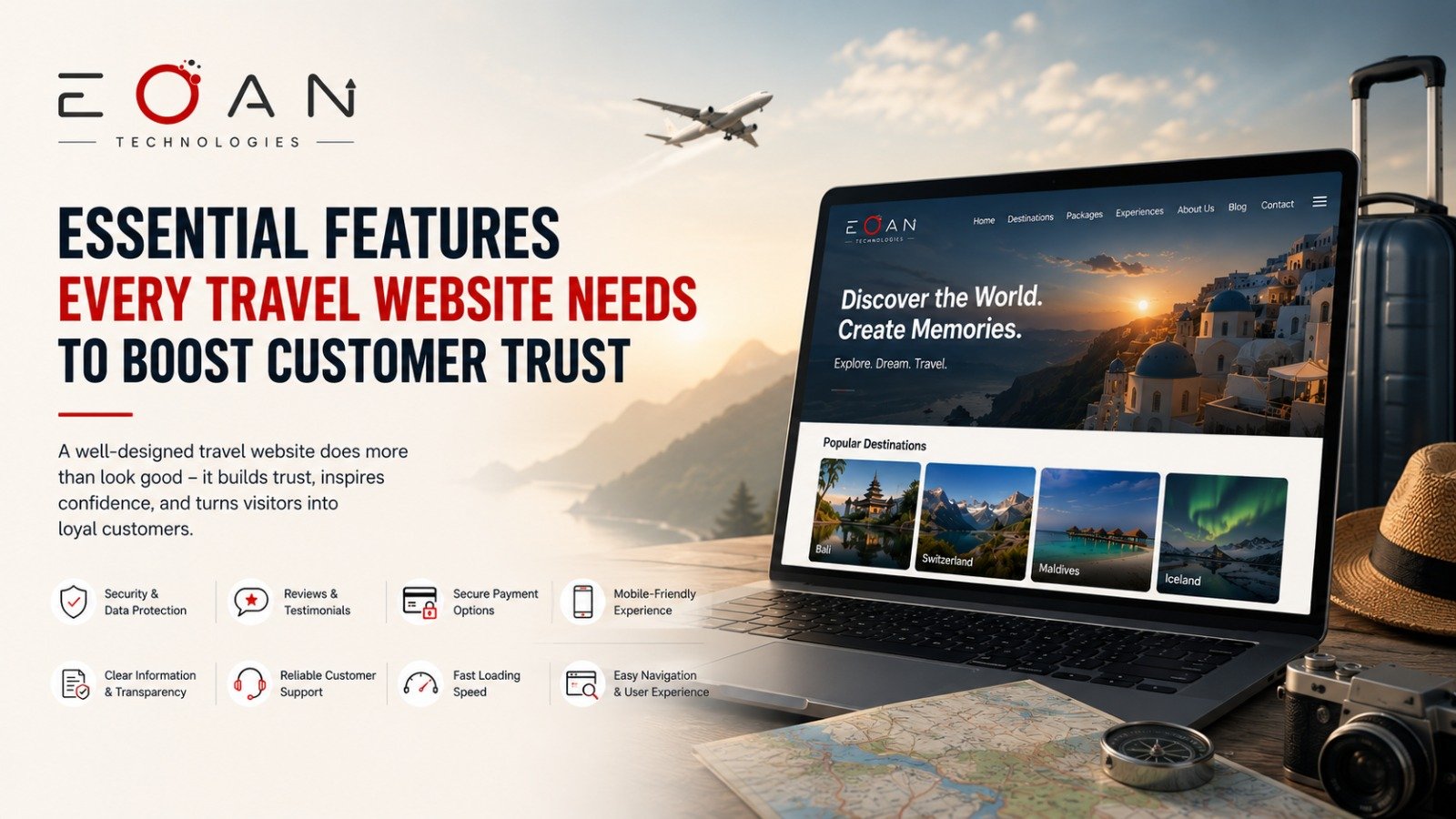
The travel industry has become more competitive than ever before. Travelers no longer rely solely on recommendations from friends or offline agencies—they compare destinations, prices, and services online before making any booking decision. Your website has become the digital storefront of your travel business, and it often determines whether a visitor becomes a paying customer or leaves for a competitor.
A professionally designed website does much more than look attractive. It reassures visitors that your business is reliable, transparent, and capable of delivering memorable travel experiences. Every design element, booking feature, and piece of content contributes to building confidence.
Businesses looking for a professional Travel Website Design Company Gurgaon eoashould prioritize agencies that understand both user experience and digital marketing. A website that combines exceptional design with functionality creates lasting trust and improves conversion rates.
Why Customer Trust Matters in the Travel Industry
Trust is one of the most valuable assets in the travel business because customers invest significant amounts of money before experiencing the service. Unlike purchasing physical products, travelers buy promises—comfortable accommodations, enjoyable vacations, seamless transportation, and unforgettable memories. Since customers cannot verify these experiences beforehand, they judge a company primarily through its website.
Research consistently shows that users form opinions about a website within just a few seconds. Poor layouts, outdated visuals, slow loading pages, broken links, or confusing navigation immediately reduce credibility. On the other hand, a clean, modern, and informative website encourages visitors to stay longer, browse packages, and eventually make reservations.
The Role of First Impressions
First impressions influence every stage of the customer journey. A visually appealing homepage with high-quality destination images, intuitive navigation, and clear messaging communicates professionalism immediately. Visitors expect a travel website to inspire confidence while also creating excitement about future trips.
A trustworthy website should include:
- Professional branding
- Consistent typography
- High-quality travel photography
- Clear call-to-action buttons
- Visible contact information
- SSL security certification
- Easy access to customer support
These seemingly simple elements collectively reassure potential travelers that your business is legitimate and dependable.
How Website Experience Influences Booking Decisions
Modern travelers compare several travel providers before booking. If your website feels outdated or difficult to use, customers rarely give it a second chance. Every click should guide visitors naturally toward finding destinations, comparing packages, and completing bookings without frustration.
An excellent website removes uncertainty by answering customer questions before they arise. Information about pricing, cancellation policies, payment options, visa assistance, travel insurance, and support channels should be easy to locate. When users don’t have to search extensively for answers, they develop greater confidence in your services.
A User-Friendly Design Creates Confidence
A website’s usability directly impacts customer satisfaction. Even the most attractive travel website will fail if visitors struggle to navigate it. Ease of use should remain the foundation of every successful travel business website.
Professional travel portal design focuses on creating intuitive user journeys that simplify trip planning from the first visit to the final booking confirmation.
Mobile-First and Responsive Experience
Today’s travelers frequently browse destinations on smartphones while commuting, relaxing, or discussing vacation plans with family. A website that doesn’t adapt seamlessly across devices risks losing a substantial portion of potential customers.
A responsive travel website ensures every page automatically adjusts to different screen sizes without compromising readability or usability. Mobile optimization improves engagement while also supporting better search engine rankings.
Essential mobile-friendly features include:
- Responsive layouts
- Click-friendly navigation
- Fast-loading images
- Easy booking forms
- Accessible menus
- Optimized payment process
These improvements create a smoother customer journey and encourage more completed bookings.
Simple Navigation and Fast Loading Speed
Website visitors appreciate simplicity. Categories should be organized logically so users can locate destinations, tour packages, hotel options, and travel guides without confusion.
Loading speed also plays a significant role in customer retention. Large images, excessive scripts, and poorly optimized code increase bounce rates. Optimized performance keeps visitors engaged while improving overall search visibility.
Google also considers Core Web Vitals when ranking websites, making performance optimization beneficial for both user experience and SEO.
Essential Booking and Security Features
No travel website can succeed without dependable booking functionality. Customers expect convenience, transparency, and secure transactions throughout the booking process.
One of the most valuable additions is an integrated hotel booking website module that allows users to compare accommodations, view availability, and confirm reservations instantly. Real-time inventory reduces booking conflicts while improving customer satisfaction.
Equally important is payment security. Travelers share sensitive personal and financial information, making robust cybersecurity essential.
A trustworthy booking platform should include:
- SSL encryption
- PCI-compliant payment gateways
- Multiple payment options
- Instant booking confirmations
- Automated invoices
- Secure customer accounts
Visible trust badges and security certifications reassure visitors that their information remains protected throughout every transaction.
Content That Builds Credibility
An attractive design may encourage visitors to stay on your website, but trustworthy content is what convinces them to complete a booking. Every page should answer common traveler questions while demonstrating your expertise in the travel industry. High-quality content also strengthens your brand identity and positions your business as a reliable source of travel information.
One of the best ways to establish credibility is by providing complete and transparent information. Instead of only highlighting attractive destinations, explain what customers can expect before, during, and after their trip. Include detailed itineraries, accommodation details, transportation options, cancellation policies, visa guidance, and frequently asked questions. This level of transparency minimizes uncertainty and makes visitors feel more comfortable investing in your services.
Professional photography also contributes significantly to trust. Generic stock photos often fail to create an emotional connection, while authentic destination images, customer experiences, and high-quality videos make travel packages feel more realistic. Interactive maps, destination guides, and travel tips further enhance user engagement by providing genuine value beyond simple booking functionality.
Reviews, Testimonials, and Visual Content
Customer feedback has become one of the strongest trust signals for online businesses. Before making travel reservations, most users actively search for reviews to understand previous customers’ experiences. Displaying authentic testimonials throughout your website reassures new visitors that others have successfully booked through your platform.
Effective credibility elements include:
- Verified customer reviews
- Google Business testimonials
- Video testimonials
- Destination galleries
- Customer travel stories
- Awards and certifications
- Partner airline and hotel logos
Displaying social proof naturally increases confidence without sounding overly promotional. Visitors are far more likely to trust the experiences of fellow travelers than marketing messages alone.
Transparent Pricing and Policies
Hidden charges are one of the quickest ways to lose customer trust. Travel businesses should clearly communicate package inclusions, exclusions, taxes, cancellation fees, refund timelines, and payment schedules before customers reach the checkout stage.
A simple comparison table also improves user understanding.
| Feature | Trustworthy Travel Website | Poor Travel Website |
| Pricing | Clearly displayed | Hidden charges |
| Cancellation Policy | Easy to understand | Difficult to locate |
| Contact Details | Visible on every page | Limited information |
| Reviews | Verified testimonials | No customer feedback |
| Payment Security | SSL & trusted gateways | No security indicators |
When customers know exactly what they are paying for, they are much more likely to complete their booking without hesitation.
SEO and Performance That Drive Organic Growth
Even the most visually impressive website cannot generate bookings if potential customers never find it. Search engine optimization plays a critical role in attracting qualified visitors who are actively searching for travel services. SEO is no longer just about keywords—it encompasses technical performance, user experience, valuable content, and website authority.
A successful travel website begins with understanding customer intent. Travelers search for destination guides, holiday packages, visa information, hotel recommendations, flight comparisons, and travel tips long before they make a booking. Creating content around these topics helps attract visitors at every stage of the buying journey.
Technical SEO is equally important. Search engines prioritize websites that load quickly, function well on mobile devices, use structured data, and maintain secure HTTPS connections. Optimized image sizes, compressed files, and clean coding practices improve both user experience and search rankings.
Optimized Content and Technical SEO
Every page should target a specific search intent while remaining informative and engaging. Rather than stuffing pages with keywords, businesses should focus on answering real customer questions using natural language.
Important SEO practices include:
- Optimized page titles
- Compelling meta descriptions
- Internal linking
- Image optimization
- Schema markup
- XML sitemap
- Fast page speed
- Mobile optimization
These technical improvements help search engines crawl and index your website efficiently while providing users with a seamless browsing experience.
Local SEO and Conversion Optimization
Many travel companies rely on local customers before expanding nationally or internationally. Optimizing your website for local search improves visibility among nearby travelers looking for reliable agencies and travel experts.
Businesses searching for a dependable Travel Website Design Company Gurgaon should choose professionals who understand both web development and SEO strategy. Combining attractive design with optimized website architecture creates long-term digital growth rather than short-term visibility.
A well-planned SEO strategy also improves conversion rates by bringing highly targeted visitors who already intend to book travel services. Instead of focusing solely on increasing traffic, businesses should aim to attract qualified users who are genuinely interested in their offerings.
Choosing the Right Development Partner
Building a successful travel website requires much more than technical coding skills. It involves understanding customer behavior, digital marketing, search engine optimization, user interface design, booking workflows, and long-term scalability. Choosing an experienced development partner ensures that every aspect of the website works together to support business growth.
A reliable development company begins by understanding your business objectives rather than immediately discussing design layouts. They analyze your target audience, booking process, service offerings, competitors, and future expansion plans before recommending the most suitable technology stack. This strategic approach results in a website that supports both current operations and future business growth.
When selecting a web development partner, look for expertise in:
- Custom travel website development
- Booking engine integration
- SEO-friendly architecture
- Mobile optimization
- CMS implementation
- Performance optimization
- Website maintenance
- Digital marketing support
Businesses seeking long-term success often prefer experienced agencies like Eoan Technologies, which combine website development with SEO, digital marketing, branding, and ongoing technical support. This integrated approach ensures your website continues generating leads even after launch.
As your travel business expands, new services, destinations, payment methods, and customer requirements will emerge. Having a trusted technology partner makes future upgrades much easier while reducing operational disruptions. Eoan Technologies focuses on scalable digital solutions that help businesses adapt to changing customer expectations and industry trends. Their experience in creating conversion-focused websites allows travel businesses to build stronger online visibility while improving customer engagement.
An ideal development partner also provides ongoing analytics, performance monitoring, security updates, and digital marketing recommendations. These continuous improvements help your website remain competitive in an increasingly crowded online marketplace. With the right expertise, businesses can confidently invest in a digital platform that delivers measurable results for years to come. Eoan Technologies understands these evolving business needs and helps organizations create websites that combine functionality, performance, and exceptional user experiences.
Final Thoughts
Customer trust is the foundation of every successful travel business. A professional website serves as more than an online brochure it becomes the primary platform where potential customers evaluate your credibility, compare your services, and ultimately decide whether to book with you. Every design choice, feature, and piece of content should work together to create confidence and simplify the customer journey.
By investing in intuitive navigation, secure booking systems, transparent pricing, authentic customer reviews, mobile responsiveness, and strong SEO practices, travel businesses can significantly improve both customer satisfaction and conversion rates. A well-planned website not only attracts visitors but also transforms them into loyal customers who return for future travel experiences and confidently recommend your services to others.
FAQs
1. Why is website design important for a travel business?
A professional website creates a strong first impression, builds customer confidence, improves user experience, and increases online bookings.
2. What features should every travel website include?
Essential features include secure online booking, mobile responsiveness, fast loading speed, customer reviews, transparent pricing, destination information, and multiple payment options.
3. How does SEO help travel websites?
SEO improves search engine visibility, attracts qualified visitors, increases organic traffic, and generates more booking opportunities without relying solely on paid advertising.
4. Why is mobile responsiveness essential?
Most travelers browse and book trips using smartphones. A mobile-friendly website ensures users enjoy a smooth experience on every device, leading to higher engagement and better conversion rates.
5. How do customer reviews improve trust?
Authentic reviews provide social proof, demonstrate previous customer satisfaction, reduce uncertainty, and encourage new visitors to complete bookings with confidence.
6. How can a professional web development company help a travel business?
An experienced development company creates scalable, SEO-friendly, secure, and conversion-focused websites while providing ongoing maintenance, digital marketing support, and technical improvements that contribute to long-term business growth.